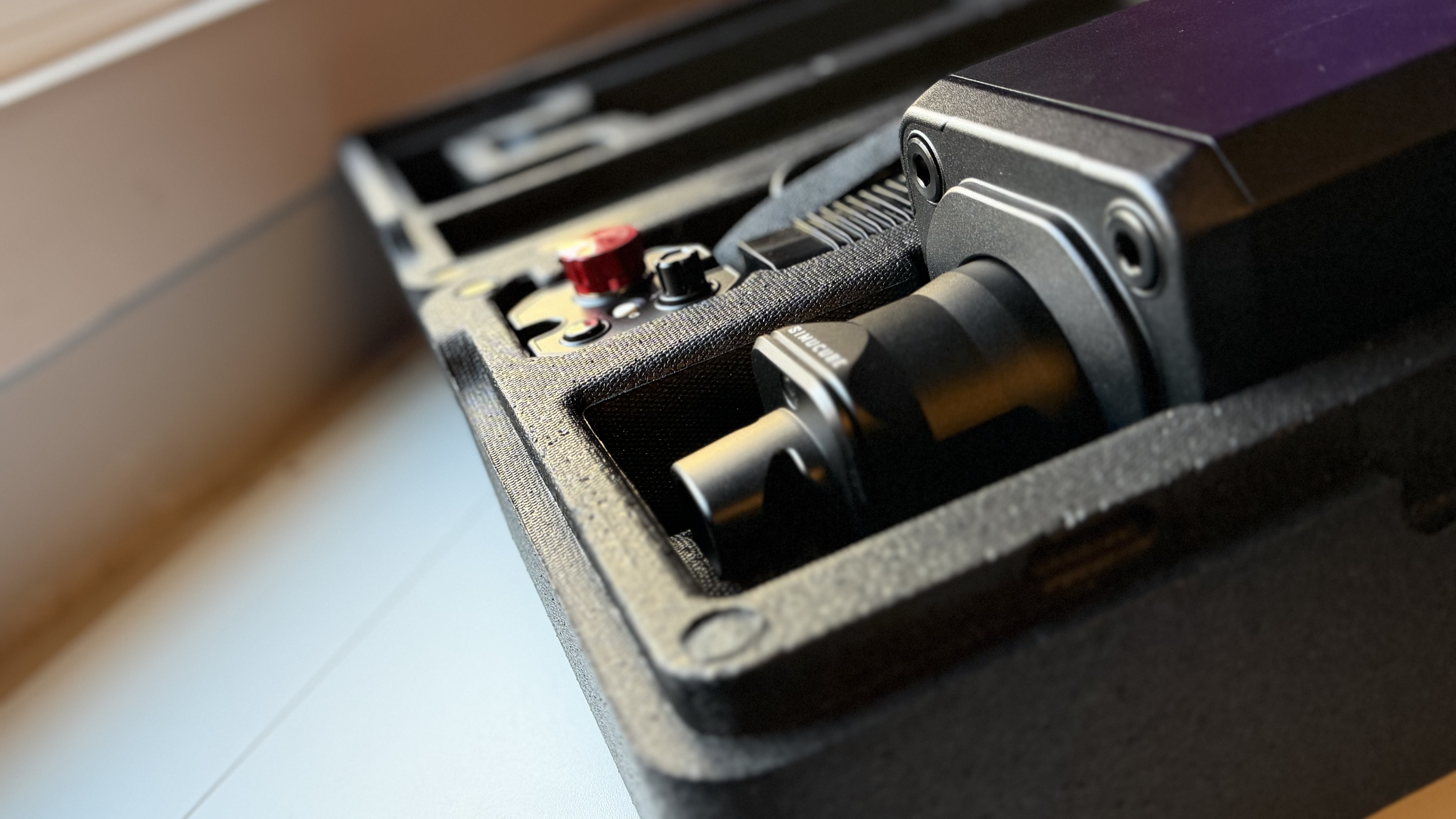
With the SC3 Ultimate now shipping, Simucube has finally closed the loop on one of the more anticipated hardware stories of the past year. Three tiers, one platform, all available: Sport at 15 Nm, Pro at 25 Nm, Ultimate at 35 Nm. The lineup is complete, and it matters more than the spec sheet suggests.
We’ve been building with Simucube hardware for years — SC2 Pro and SC2 Ultimate have been our direct drive of choice across a wide range of our bespoke simulators. So when the SC3 generation started rolling out, we paid close attention. Now that all three variants are shipping, we can give you a clear-eyed breakdown of what the completed family actually means for anyone spec’ing a serious rig in 2026.
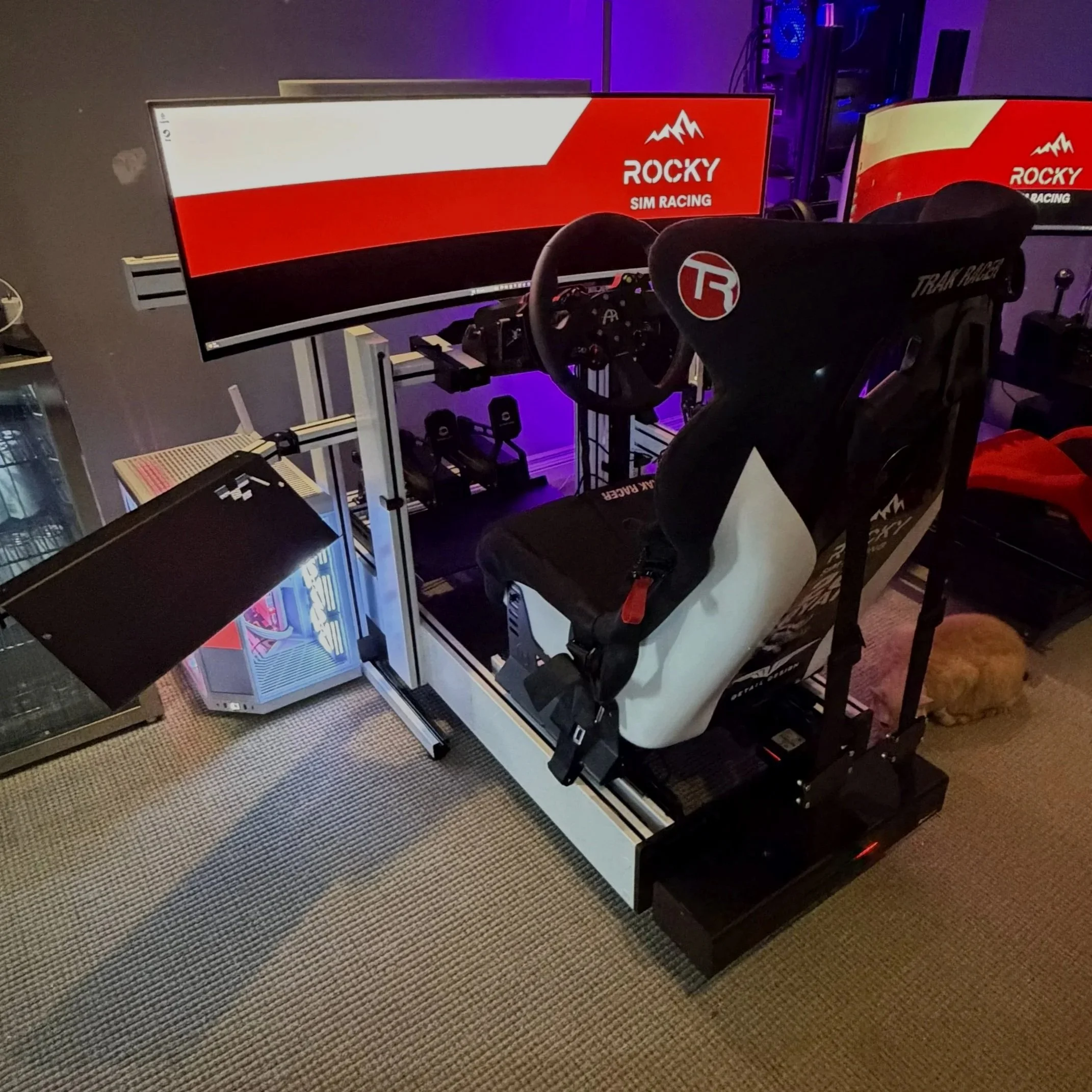
Why a Unified Platform Changes the Conversation
The SC2 generation was excellent hardware, but it was never a coherent family in the way the SC3 is shaping up to be. Buyers often mixed generations, compromised on torque tiers, or waited for stock to stabilize. The SC3 lineup solves that structural problem.
All three SC3 models — Sport, Pro, and Ultimate — share the same new servo motor architecture and the same redesigned wireless-power quick-release system. This is significant. It means the underlying platform quality is consistent whether you’re buying into the entry tier or going all the way to 35 Nm. The motor design, the control algorithm, the QR interface — all of it is the same across the family. You’re not sacrificing platform investment by choosing the Sport, and you’re not getting a categorically different piece of hardware when you upgrade to the Ultimate.
That platform coherence also matters to us as builders. We can now spec a Simucube-based wheel setup at any budget level and know the customer is on the same ecosystem, the same software, the same QR standard. That’s a cleaner story to tell than “the Sport is fine but eventually you’ll want to step up to hardware that’s actually related to what the serious sim racers use.”
Breaking Down the Torque Tiers
The question we hear most often is: “How much torque do I actually need?” The honest answer is that it depends on what you drive, not how serious you are about sim racing.
SC3 Sport — 15 Nm
Fifteen Nm is genuinely enough for a wide range of applications, and we won’t pretend otherwise. If your primary disciplines are GT3 racing on iRacing, Formula 4, or road car sim content, the Sport delivers meaningful force feedback at a weight and price point that makes it sensible for builds where the full 25 or 35 Nm would be overkill. The Sport also makes sense in setups where steering column geometry limits how much torque you actually want — a full 35 Nm on a sim rig without proper column reinforcement is counterproductive.
That said, if you’re serious about open-wheel driving — anything with significant aero generating high-speed cornering forces — you’ll feel the ceiling of 15 Nm in high-speed sweepers. The feedback compresses at the top end, and the nuance in weight transfer gets harder to read.
SC3 Pro — 25 Nm
This is our default recommendation for most customers and the tier we’ve specced most in our builds. Twenty-five Nm covers virtually every sim racing discipline with room to spare. GT3, GT4, LMP, open-wheel Formula — you’re not fighting the hardware at any point. The SC3 Pro hits the sweet spot between resolution of detail at low forces and headroom at high loads. You get both.
We also ran extensive endurance content on the SC2 Pro for our 12 and 24-hour events, and the SC3 generation refines what already worked. The updated control algorithms produce noticeably sharper transients — impacts, curb strikes, and understeer onset register faster and with more distinction than the SC2 generation. Whether that translates to faster lap times probably depends on your setup, but it translates to more information, and information is what direct drive is supposed to deliver.
SC3 Ultimate — 35 Nm
Thirty-five Nm isn’t for everyone, and we’ll be direct about that. If you’re running high-downforce prototype content — LMH, LMDh, classic Group C — at realistic force scaling, 35 Nm starts to make sense in a way it genuinely doesn’t for slower cars. The aero signature on a hypercar at 200 km/h generates cornering forces that you want to feel in the wheel, and at 25 Nm you’re already scaling down to make the forces manageable. The Ultimate lets you run closer to realistic force scaling without hitting a ceiling.
The other case for the Ultimate is professional training rigs where fidelity is the primary objective and ergonomics are fully engineered — column brace, harness, proper seat mounting. At that level, the extra headroom on peak forces is meaningful, and the platform is otherwise identical to what you’re getting on the Pro.
What we don’t recommend is buying the Ultimate because “more Nm is better” without thinking about the rig it’s going into. A 35 Nm wheel base on an underbracced rig is a worse experience than a 25 Nm base on a properly engineered simulator. Force feedback fidelity requires the rig to be stiff enough to not absorb the feedback before it reaches you.
The Wireless QR System — What It Actually Changes
The redesigned quick-release system on the SC3 family deserves more attention than it’s getting. Moving power and signal through the QR wirelessly rather than through a physical connector sounds like a convenience feature; in practice it changes rig ergonomics in meaningful ways.
Previous quick-release designs introduced some flex at the interface point under high torque loads — not enough to cause problems in most setups, but enough to show up as a slight softness in the feedback, particularly on hard curb strikes. The SC3 QR interface eliminates that mechanical weak point. The connection is more rigid, and the result is that the transient response we mentioned above — sharper impacts, cleaner curb feedback — is partly a function of the QR design as much as the control algorithm.
For multi-wheel setups, the wireless power design means swapping between an open-wheel rim and a GT rim takes seconds without fussing with connectors. For customers who run multiple disciplines, that ergonomic improvement is real.
What This Means for Our Builds
Now that all three SC3 variants are shipping, we’re in a position we haven’t been before: we can spec Simucube hardware at every tier without compromising on platform consistency or asking customers to mix generations. The entry point into the SC3 ecosystem is genuinely strong, and the upgrade path to the Ultimate is clearly defined.
Our current thinking on tier allocation across our simulator packages: SC3 Pro remains our default across the range, SC3 Sport is the right call for builds where budget is a constraint but direct drive quality still matters, and SC3 Ultimate goes into our most performance-focused custom builds where the customer is running high-downforce content at full force scaling and the rig is engineered to handle it. That’s not a hedge — that’s a coherent framework we didn’t have before the SC3 family was complete.
We’ve been building with Simucube hardware long enough to know what separates good hardware from hardware that earns its place in a professional rig. The SC3 lineup earns it across all three tiers. For anyone currently weighing a direct drive upgrade or spec’ing a new build, the conversation just got cleaner.
If you’re figuring out which torque tier makes sense for your driving style and the disciplines you spend most time in, we’d be glad to walk through it. That’s a ten-minute conversation with someone who’s raced on all of this hardware — and it’s the kind of detail that makes the difference between a build you enjoy and a build you upgrade six months later.
Want more analysis on direct drive hardware and how it translates to real sim rig builds? Browse our sim racing articles for more from the RSR team.