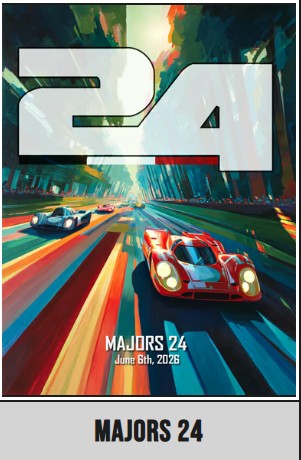
On June 6th, we lined up three cars for the iRacing Majors 24H at Le Mans — a paid, professionally hosted endurance event that put our GTP, LMP2, and GT3 teams on track for a full day of racing. Each team spent weeks in practice getting ready, and by the time super pole rolled around at 7am, all three were locked into their splits and ready to go.
How the Field Gets Set
The Majors format doesn’t just throw everyone on track together based on the teams average irating the day of the race. Splits are determined by pre-qualifying, held five days before the race, where every participating driver gets two chances to set a fastest qualification-style lap. Those times get averaged across the team to determine which split — and which starting spot within it — a car lands in. It’s a format that rewards preparation as much as raw pace, and it meant our three teams went into race day in three very different starting positions, in three different splits, against three different fields.
GTP: A Podium Built on Pace and Fuel Strategy
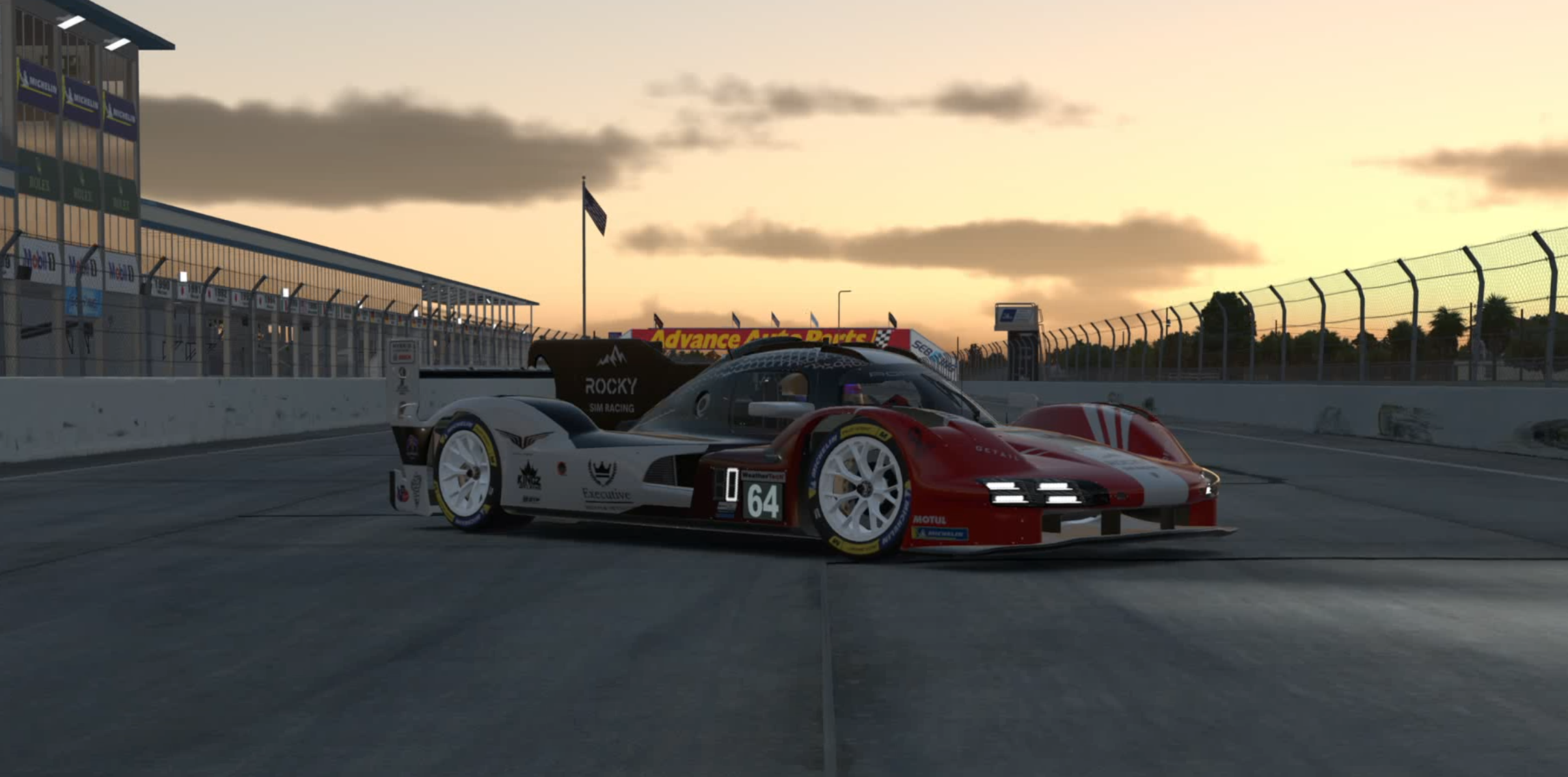
Our top team, running the Porsche GTP, qualified 19th in split 11 — mid-pack against a strong field. From there, they raced their way forward on outright speed and disciplined fuel-saving strategy, matching the pace of the cars around them and steadily opening a gap on the rest of the field. That gap held, and the team crossed the line in 2nd.
It wasn’t a clean 24 hours to get there. One of the drivers was unable to complete his stints, which meant the rest of the lineup had to absorb the extra load — pushing into triple and even quadruple stints to keep the car moving. That’s a brutal ask in any endurance race, physically and mentally, and it came with its share of close calls. The team pulled through anyway, and the podium is a direct result of drivers who could grind out extended runs without the car — or their focus — falling apart.
LMP2: Bad Luck, Good Grit
Our LMP2 entry started 25th in split 17 and had genuine race pace to match — the team was consistent and competitive for long stretches. Then bad race luck intervened: the car was launched into the air in an incident mid-race, a moment that cost significant time and put them a lap down. From there it was a matter of grinding back what they could. They finished 32nd — not the result the pace deserved, but a solid recovery given the circumstances. Notably, one of the drivers was racing an LMP2 car for the very first time in this event and turned in a strong run under difficult conditions.
GT3: A Rough 24 Hours
Our GT3 team had the toughest day of the three. Starting 40th in split 18, they dealt with hardware failures over the course of the race along with a steady diet of bad luck in faster traffic — the kind of race where every mechanical gremlin and every contact seems to land on the same car. They finished 45th. Not the outcome anyone wanted, but a finish earned through a genuinely difficult 24 hours.
Proving the Hardware Under Race Conditions
Beyond the three team entries, this event doubled as a stress test for our own equipment. Shayne raced the entire 24 hours on our Darkside motion racing simulator and came away with another podium finish. That’s the detail we care about most here: a full endurance event, on a motion rig, on hardware we spec into our builds every day, with no equipment issues over 24 straight hours of racing.
That’s not an accident. It’s the direct result of engineering mounts and structures that are built to hold up under sustained, high-load endurance racing — not just survive a demo lap. We don’t build simulators to look good in a showroom; we build them to take the same abuse our own drivers put them through in races exactly like this one. When one of our machines does a full Le Mans 24-hour stint without a single hardware complaint, that’s the proof point that matters more than any spec sheet.
What This Race Confirmed
Three cars, three splits, three very different outcomes — a GTP podium built on pace and fuel management, an LMP2 result salvaged from a bad-luck flip, and a GT3 run that tested everyone’s resolve through hardware failures and traffic. That range is exactly why endurance racing is the truest test of both a driver lineup and the equipment underneath them. It’s one thing to be fast for 20 minutes. It’s another to still be fast, focused, and mechanically sound 20-plus hours in.
That’s the same standard we hold our simulators to. If you want to see the actual rigs our teams — and Shayne himself — raced Le Mans on, check out the builds we run. And if you’re ready to talk about a rig engineered to survive your own version of a 24-hour race, book a consult and we’ll walk you through what goes into a build that’s genuinely endurance-tested.