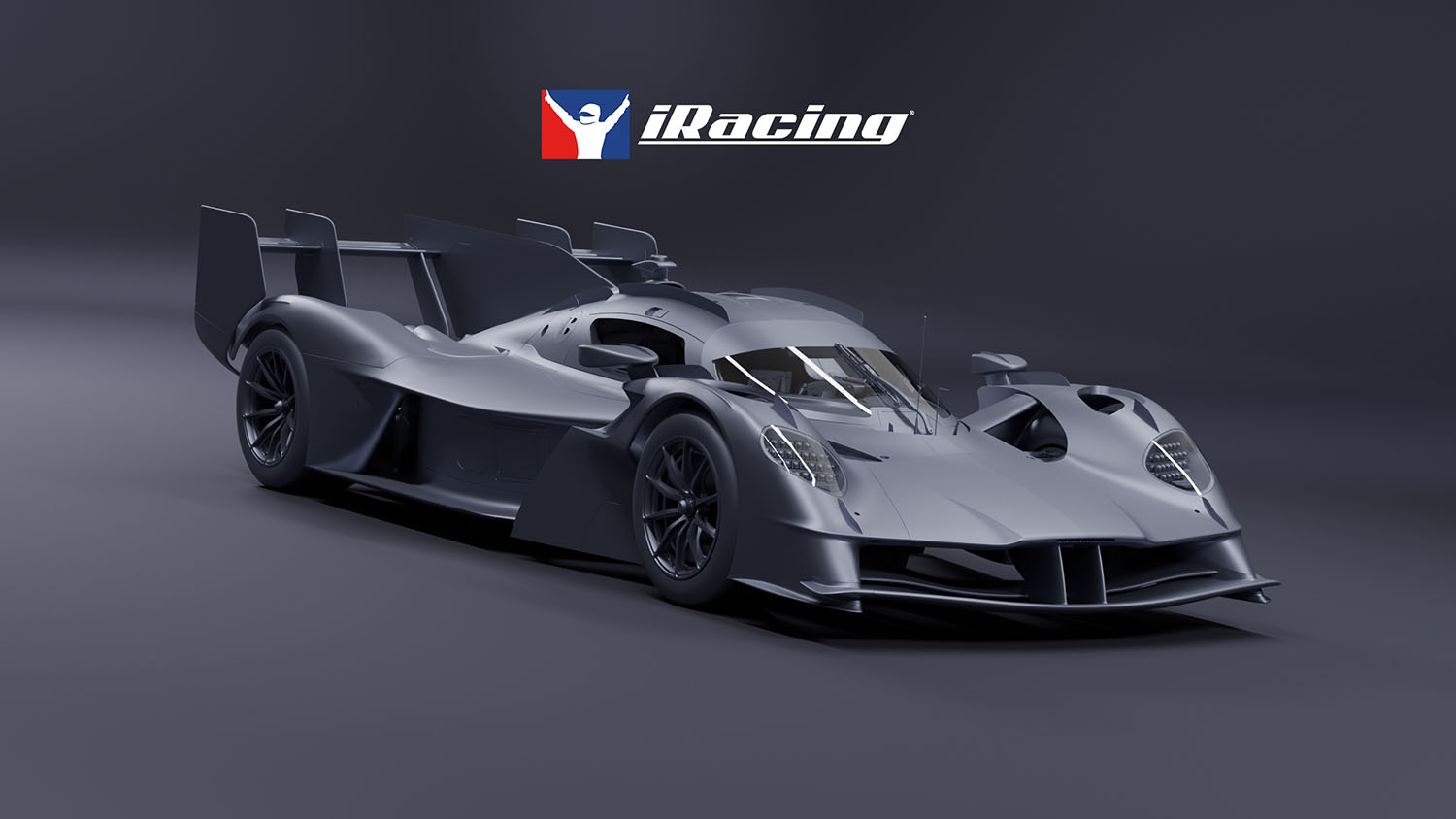
iRacing pushed its Season 4 2026 build live on September 9, and it’s the kind of update that reshuffles more than the car list. Alongside new content, the service rebuilt the physics model for a wide swath of the fleet — which means the way these cars talk to you through the wheel just changed, whether you’ve noticed yet or not.
What’s New in the Build
The headline addition is the Aston Martin Valkyrie AMR-LMH, joining the Hypercar/LMDh ranks alongside the existing GR010, 963, and 9X8. It’s the first Aston Martin in iRacing’s top prototype class and gives that field a genuinely different aero and power delivery character to learn.
Grassroots and oval racers get their own additions. The Caterham Academy and Caterham 420R slot in as lightweight, momentum-driven road cars — exactly the kind of low-power, high-feedback platform that teaches car control without punishing every mistake. On the oval side, the Gen 4 NASCAR Grand National car arrives, filling out the stock car ladder for drivers working their way toward Cup-spec machinery.
Track-wise, Road America, Mid-Ohio, and Milwaukee Mile all received full laser rescans. This isn’t a texture refresh — laser scanning captures actual surface elevation, camber, and undulation data from the real circuits, and it typically changes how cars load and unload through specific corners. If you had a setup dialed for Road America’s Carousel or Mid-Ohio’s esses, expect to re-learn the bumps.
The build also ships a redesigned pit and damage UI, giving a clearer real-time read on repair time, fuel strategy, and damage state — useful in anything from a sprint race to a multi-hour endurance stint.
The Physics Overhaul Is the Real Story
New cars and rescanned tracks are additive. The physics overhaul is structural. iRacing reworked the underlying handling model for the affected cars — tire load response, weight transfer, and the way the car communicates grip limits near the edge. That’s a deeper change than a tire compound tweak or an aero balance pass.
Practically, this means the force feedback signal coming through your wheel for those cars has changed too. Drivers who’ve spent hundreds of hours building an intuition for exactly when a GT3 car steps out, or how much curb a hypercar chassis can absorb before it unsettles, are going to feel something different under their hands this week. Setups that were previously dialed to mask a car’s quirks may now be fighting a car that doesn’t have those quirks anymore — or has new ones. The instinct to reach for last season’s setup sheet is understandable, but on a physics-overhauled car, it’s often the wrong move. Better to start from a baseline setup and relearn the car’s limit by feel before layering in adjustments.
This is also where hardware quality stops being optional. A physics model this granular is only useful if your wheelbase, pedals, and rig can actually transmit it without adding noise, lag, or mechanical slop on top. On a soft belt-driven wheel or bargain-bin load cell pedals, a lot of that new detail simply doesn’t arrive.
Why This Matters for How We Build
This is exactly the scenario that shapes how we spec our simulators. A physics overhaul like Season 4’s changes how every affected car communicates through the wheel — which is precisely why we don’t ship a single generic force feedback profile across every build and call it done. We tune FFB strength, damping, and pedal response per car, because a GT3 machine and a Gen 4 stock car should never feel like the same input device wearing different bodywork. When iRacing rewrites the handling model underneath a car, that’s a signal to revisit the tuning, not ignore it.
We’re already running Season 4 on our shop builds in Calgary — new Valkyrie, rescanned Road America, the works — so we can feel out how the changes land before our customers do. That’s the same approach we’ve taken through every major iRacing season update: race it internally first, adjust our reference setups, then pass that experience on when we’re speccing a rig for someone’s driving style. If you want the fuller story on what changed a couple of seasons back, we covered that in our Season 3 rundown, and the pattern holds — iRacing doesn’t sit still, and neither should your rig’s tuning.
Turn-Key Means the Update Doesn’t Slow You Down
The other side of a build this size is simple readiness: new physics, a new Hypercar, and three rescanned circuits all ask more of the PC running them, especially at high refresh rates on a triple-screen or VR setup. Every simulator we engineer is optimized for our turn-key PCs, built and endurance-tested specifically for iRacing’s workload — so when a season drops with this much under the hood, you’re not the one troubleshooting frame time spikes or force feedback stutter while everyone else is out learning the new Valkyrie.
If you’re already racing on one of our rigs, this is a good week to open your car setups folder and start fresh rather than trusting muscle memory. And if you’re spec’ing a build and want it tuned around how you actually want these cars to feel once the dust settles on this physics pass, come see us. You can read more about who we are and how we approach these builds on our about page, or skip straight to booking a demo session at our Calgary shop and feel the difference for yourself.